Growing Tomatoes: From Seed to Sauce
- 28 Dec, 2025
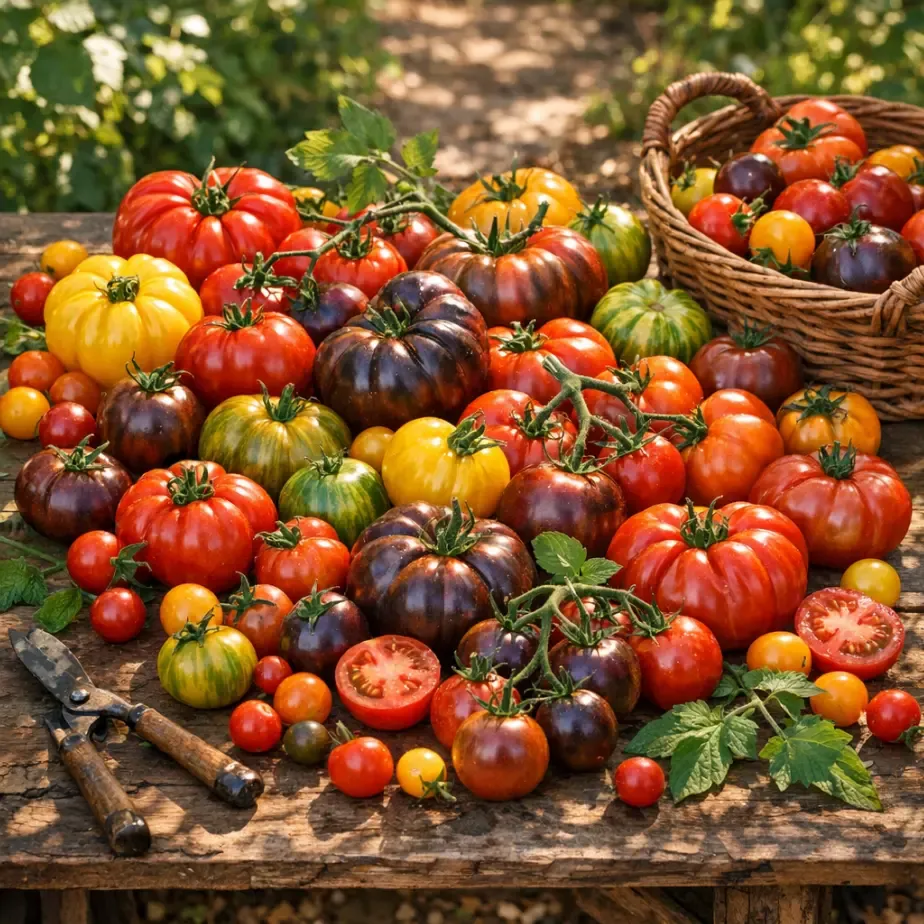
Tomatoes are the crown jewels of my summer garden. Nothing compares to a sun-warmed tomato eaten right outside, juice on your fingers and all. It really is a different fruit from store tomatoes. Here’s what I’ve learned over the years, including a few lessons I learned the hard way.
Choosing Your Tomato Varieties
Determinate vs. Indeterminate
Determinate (Bush) tomatoes:
- Compact, bushy growth (3-4 feet)
- Fruit ripens all at once
- Great for containers and small spaces
- Good for canning and preserving
- Examples: Roma, Celebrity, Bush Early Girl
Indeterminate (Vining) tomatoes:
- Continuous growth (6-10+ feet)
- Produce fruit all season until frost
- Need sturdy support
- Best for fresh eating
- Examples: Cherokee Purple, Brandywine, Sun Gold
My Favorite Varieties
- Cherry: Sun Gold (sweet and prolific), Black Cherry (complex flavor)
- Slicing: Cherokee Purple (heirloom perfection), Big Beef (reliable producer)
- Paste: San Marzano (sauce heaven), Amish Paste (meaty and flavorful)
- Container: Tumbling Tom, Patio Princess
Starting Tomatoes
From Seed
Start seeds indoors 6-8 weeks before your last frost date.
- Sow seeds ¼ inch deep in seed-starting mix
- Keep warm (70-80°F). A heat mat helps enormously
- Provide strong light once sprouted
- Transplant to larger pots when first true leaves appear
- Keep soil consistently moist but not soggy
From Transplants
If you buy nursery starts:
- Look for stocky, deep green plants
- Avoid leggy or flowering plants
- Check for pests and disease signs
Planting Out
Timing
Wait until:
- Night temperatures consistently above 50°F
- Soil temperature at least 60°F
- 1-2 weeks after last frost date
The Deep Planting Secret
Here’s my best tomato tip: plant them deep! Remove the lower leaves and bury the stem up to the top set of leaves. Tomatoes root along their stems, creating a stronger, more robust plant.
Spacing
- Determinate: 2-3 feet apart
- Indeterminate: 3-4 feet apart
- Rows: 4-5 feet apart
Support Systems
Tomatoes need support. Options include:
Cages: Easy but need to be sturdy (those flimsy cone cages aren’t enough for indeterminate types)
Stakes: Traditional method, requires regular tying
String trellising: Commercial technique, very effective for indeterminate varieties
Florida weave: Great for rows, uses stakes and twine
Care Throughout the Season
Watering
- Deep, consistent watering is key (1-2 inches per week)
- Water at soil level, not on leaves
- Mulch to retain moisture
- Inconsistent watering causes blossom end rot and cracking. For a full routine, see How to Water a Vegetable Garden the Right Way
Feeding
- Side-dress with compost when fruits start forming
- Use balanced fertilizer, not too much nitrogen (causes lots of leaves, few fruits)
- Stop fertilizing when plants are loaded with fruit
Pruning (Indeterminate Types)
Remove suckers (the shoots that grow in the “armpit” between the main stem and branches) for:
- Better air circulation
- Larger fruits
- Easier management
I let 2-3 main stems develop and remove the rest.
Common Problems
Blossom End Rot
Symptom: Dark, sunken spots on fruit bottoms
Cause: Calcium uptake issues, usually from inconsistent watering
Solution: Mulch, water consistently, don’t over-fertilize
Early/Late Blight
Symptom: Brown spots on leaves, spreading upward
Cause: Fungal diseases
Solution: Remove affected leaves, improve air circulation, mulch, avoid overhead watering
Tomato Hornworms
Symptom: Large green caterpillars defoliating plants
Solution: Hand-pick (they’re actually easy to spot!), attract parasitic wasps
Cracking
Symptom: Cracks radiating from stem
Cause: Irregular watering, especially heavy rain after dry spell
Solution: Consistent watering, harvest at first sign of cracking
Harvesting and Storing
When to Pick
- Color is fully developed
- Slight give when gently squeezed
- Easily detaches from vine
For best flavor, let tomatoes ripen on the vine. But if frost threatens or pests are a problem, pick at “breaker stage” (just starting to color) and ripen indoors.
Storage
Never refrigerate tomatoes! Cold temperatures destroy flavor and texture. Store at room temperature, stem-side down.
End of Season
When frost approaches:
- Pick all remaining tomatoes
- Green tomatoes will ripen indoors (place in paper bag with a banana)
- Make fried green tomatoes or green tomato salsa with truly unripe ones
My Tomato Journey
I grow about 15-20 tomato plants each year: cherries for snacking, slicers for sandwiches, and paste tomatoes for sauce. There’s nothing like spending a late summer day turning that harvest into jars you’ll open in the middle of winter.
The first ripe tomato of the season is always a celebration. I slice it thick, add a little salt, and eat it standing right there in the garden. If this is your first tomato year, that first bite makes every wobble worth it.